
The short answer: A hair dermatologist shouldn’t recommend PRP until they know why your hair is falling. Finding that out takes five checks: your history, the pattern of loss, a pull test, trichoscopy (a magnified look at the scalp) and blood tests where they’re needed. PRP has the most evidence for one particular kind of hair loss, usually as an add-on to medical treatment. For several others, it’s the wrong first step.
If you’ve been searching for hair fall treatment in Delhi, you’ve probably seen packages advertised before anyone has looked at your scalp. This guide explains what a proper assessment by a hair dermatologist in Delhi should involve, and what each finding means. It also covers when PRP actually makes sense, so you can walk into any consultation knowing what to expect and what to ask.
“Hair fall” is a symptom, not a diagnosis
Most people use “hair fall” to describe three very different things:
- Shedding. More hairs than usual come out from the root, often in the shower or on the pillow. Losing around 50 to 100 hairs a day is normal.
- Thinning. The hairs themselves become finer and more scalp shows, usually at the crown, the hairline or along the parting. This often happens without dramatic shedding.
- Breakage. Hairs snap along their length instead of falling from the root. This is a problem with the hair shaft, not the follicle.
Each has different causes and needs a different treatment. PRP does nothing for breakage, for example, and shedding after a fever usually settles by itself. That’s why the assessment comes first, and why there’s no single “best hair fall treatment in Delhi” that suits everyone.
What happens at a hair assessment, step by step
1. A detailed history
Your dermatologist will ask questions that can seem unrelated to hair, but the answer often lies in them:
- When did it start? Was there anything in the two or three months before, such as dengue, typhoid, surgery, childbirth, a crash diet or a stressful event?
- Does anyone in your family have thinning hair, and at what age did it start?
- What medicines and supplements do you take?
- For women: are your periods regular, and have you noticed acne or new facial hair? These can point to a hormonal cause such as PCOS.
- How do you wear and treat your hair? Tight buns or braids, frequent heat styling, and keratin or smoothening treatments all matter.
2. Looking at the pattern
Where you’re losing hair says a great deal:
- Receding temples and a thinning crown in men, or a widening parting with the front hairline intact in women, usually suggest pattern hair loss (androgenetic alopecia). Women can read more in our guide to female pattern hair loss in India.
- Smooth, round bald patches suggest alopecia areata, an autoimmune condition.
- Thinning along the hairline or temples in someone who wears tight hairstyles suggests traction alopecia.
- Even thinning all over, with heavy shedding, often suggests telogen effluvium. This is shedding triggered by illness, stress, childbirth or a sudden change in diet.
3. The hair pull test
The dermatologist gently pulls a small bunch of about 50 to 60 hairs from a few areas of the scalp. If more than around one in ten hairs comes away easily, there is active shedding. The test takes seconds and doesn’t hurt. It tells your dermatologist whether the problem is happening now or has already settled.
4. Trichoscopy
Trichoscopy uses a handheld dermatoscope to magnify the scalp and the hair shafts. It’s quick and painless, and it shows what the naked eye can’t:
- Miniaturisation. A mix of thick and much finer hairs growing in the same area is the hallmark of pattern hair loss. It also shows the follicles are still alive, which matters for treatment.
- Signs typical of alopecia areata, such as short, broken “exclamation mark” hairs.
- Broken shafts with healthy roots, which point to breakage rather than hair loss.
- Redness, scaling or missing follicle openings, which can signal scalp inflammation or a scarring condition. These need a different approach entirely.
Your dermatologist should also take baseline photographs. That way, progress over the next few months is measured rather than guessed.
5. Blood tests, when they’re needed
Not everyone needs a full panel. When your history suggests a medical cause, a dermatologist will commonly check:
- Haemoglobin and ferritin. Iron stores can be low even when haemoglobin is normal, and low iron stores are linked to shedding, particularly in women.
- Thyroid function. An underactive or an overactive thyroid can both cause diffuse hair loss.
- Vitamin D and vitamin B12. B12 is especially worth checking if you’re vegetarian.
- Hormone tests for women with signs of PCOS, as advised.
If you’ve had blood tests in the last few months, bring the reports. They may save you from repeating them.
6. Occasionally, a biopsy
If trichoscopy suggests a scarring condition, a small scalp biopsy may be needed to confirm it. This is uncommon, but it matters. Scarring hair loss destroys follicles permanently, so early treatment protects the hair you still have.
What the assessment finds, and whether PRP comes next
| What the assessment shows | What it usually means | Is PRP the first step? |
|---|---|---|
| Thick and fine hairs mixed at the crown, hairline or parting; family history | Pattern hair loss (androgenetic alopecia) | Sometimes, usually added to prescription medical therapy while follicles are still active |
| Diffuse shedding that began a few months after a fever, surgery, childbirth or crash diet | Telogen effluvium | Usually no. Shedding stops as the body recovers, and fullness typically returns within six to nine months. If shedding continues past about six months, get reassessed |
| Low ferritin, thyroid imbalance or a vitamin deficiency | A medical or nutritional cause | Not yet. Correct the cause first, then reassess |
| Smooth, round patches | Alopecia areata | No. A dermatologist treats this medically |
| Broken shafts, healthy roots, dry or rough hair | Breakage from hard water, heat, chemical treatments or tight styles | No. This needs changes to hair care, not injections |
| Thinning at the hairline with a history of tight hairstyles | Traction alopecia | No, not first. Changing how hair is worn comes first |
| Itching, scaling, pustules or shiny scarred patches | Infection, inflammation or scarring hair loss | No. PRP isn’t done on an infected or inflamed scalp |
So when does a dermatologist recommend PRP?
PRP (platelet-rich plasma) uses a small sample of your own blood. The sample is spun to concentrate the platelets, which are then injected into the thinning areas of the scalp. Platelets release growth factors, which are thought to support follicles that are weakening but still alive.
The strongest evidence for PRP is in pattern hair loss at an early-to-moderate stage, in both men and women. That condition is the key. PRP supports follicles that are miniaturising; it can’t bring back follicles that are gone. An area that has been fully bald for years, or a shiny, scarred patch, won’t regrow with PRP.
If you’ve been offered PRP hair treatment in Delhi before anyone has examined your scalp, ask what diagnosis it’s treating.
How a course usually runs. A common schedule is one session a month for three months. Maintenance sessions every three to six months follow, because pattern hair loss keeps progressing. Many people notice less shedding within the first few months, but changes in density take longer. Your dermatologist will set your schedule after the assessment and check it against your baseline photos.
Who should wait or avoid it. Before going ahead, your doctor will check for:
- blood or platelet disorders
- blood-thinning medicines
- an active scalp infection
- pregnancy or breastfeeding
- cancer or ongoing chemotherapy, chronic liver disease, or recent use of certain painkillers
PRP, GFC, QR678 and exosomes: how they differ
You’ll hear several names at Delhi clinics. In brief:
- PRP. Your own platelets, concentrated and injected.
- GFC (growth factor concentrate). Also made from your own blood, but processed to extract the growth factors themselves rather than injecting the platelets.
- QR678. A patented, laboratory-made formulation of growth factors and peptides. Nothing is drawn from your blood.
- Exosome therapy. Tiny cell-derived particles that carry growth signals. This is the newest option, and research on it is still developing.
None of these replaces the assessment, and none is right for everyone. All of them aim to support weakening follicles in pattern hair loss, but the evidence behind each differs, and PRP has the most. Which one suits you depends on your scalp, your budget and your preferences. We compare them in more depth, alongside hair transplants, in Hair Transplant vs PRP vs Exosome Therapy.
Hair fall in Delhi: local factors worth raising
Some triggers are especially common in Delhi. Mention any that apply at your consultation:
- Shedding after dengue or typhoid. Delhi’s post-monsoon fever season is often followed, a few months later, by a wave of shedding. It’s alarming but usually temporary.
- Hard water. Many Delhi and NCR homes have hard water. Its mineral deposits may make hair feel rough and more prone to breakage, though research is limited. It doesn’t damage the follicle. See how to treat hard water hair damage.
- Winter pollution. High AQI can irritate the scalp, though there’s little evidence that pollution directly causes permanent hair loss. More in pollution, AQI and your hair.
- Pre-wedding crash diets. Rapid weight loss is a classic trigger for shedding a few months later, often just as the wedding arrives.
- Salon smoothening and tight styles. Frequent keratin or rebonding treatments can cause breakage. Years of tight buns or braids can lead to traction alopecia.
Dermatologist or trichologist?
Many people search for a trichologist in Delhi. In India, “trichologist” isn’t a separate medical degree recognised by the National Medical Commission. The title is used by everyone from dermatologists who focus on hair to people who have completed a short, non-medical course.
What matters is whether the person examining you is a registered medical doctor with a dermatology qualification (MD, DNB or DDVL). A registered medical doctor can diagnose medical causes, interpret your blood tests, prescribe medicines and perform or supervise procedures such as PRP.
At AAYNA, hair assessments are carried out by our dermatologists. [VERIFY: confirm assessments are always dermatologist-led at SDA and Khan Market.]
What to bring to your first hair consultation
- Blood test reports from the last three to six months
- A list of the medicines and supplements you take
- Photos of your hair from a year or two ago, if you have them
- The names of the shampoo and hair products you use
- A note of when the shedding started, and anything that happened in the months before
On the day, come with clean, dry hair. Skip oil, serums and styling products, because they make trichoscopy harder to read.
Hair fall treatment at AAYNA in Delhi
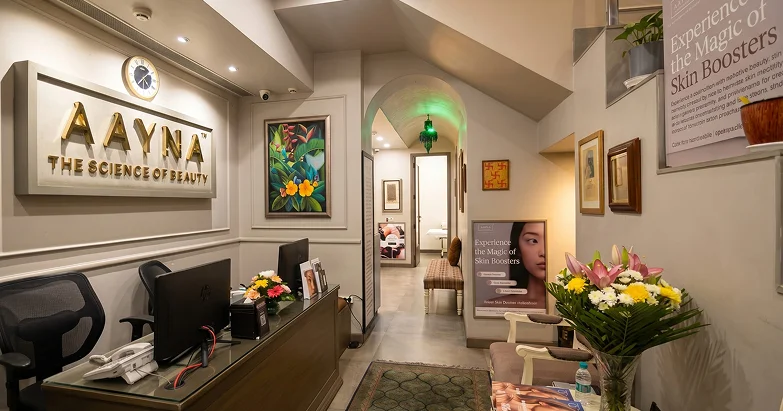
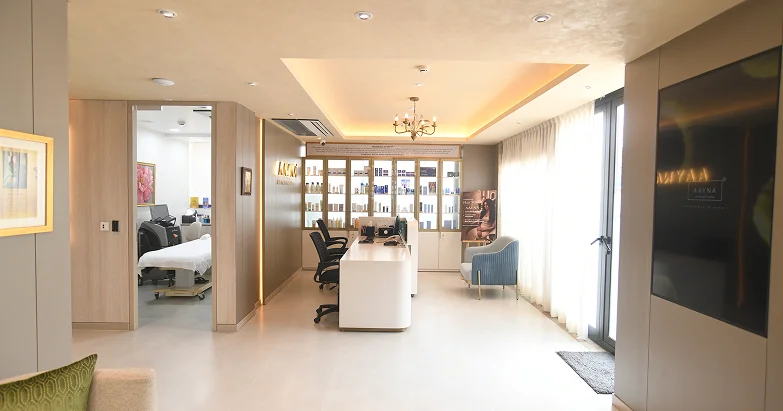
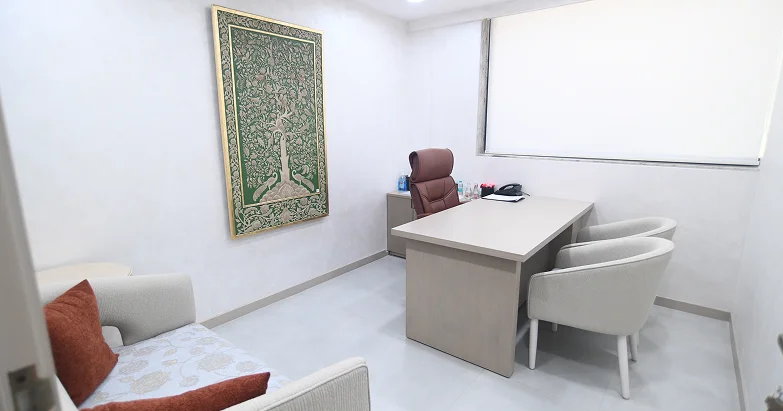
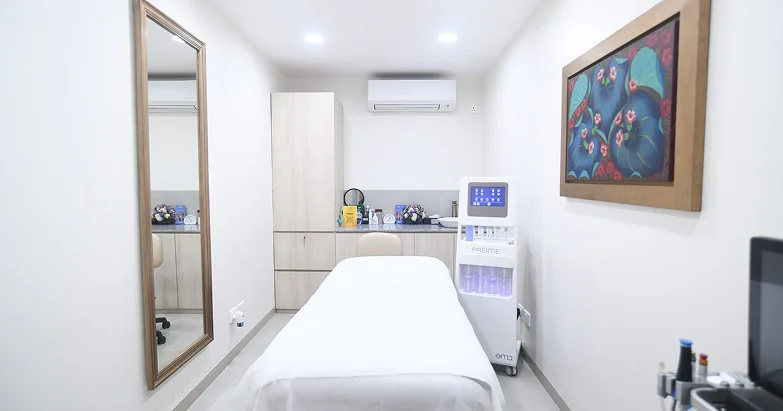
Whether you’re looking for hair fall or hair loss treatment in Delhi, AAYNA has two clinics where you can have a hair assessment. Every plan starts with a consultation and a scalp assessment, not a package, and we’ll tell you if a treatment isn’t right for you. [VERIFY: the initial consultation is free at both clinics. The SDA page says it is free at SDA.]
AAYNA, SDA (South Delhi) C3/1, Safdarjung Development Area, New Delhi 110016 A few minutes from Green Park and Hauz Khas · Nearest metro: Green Park or IIT Delhi · Valet parking Phone: +91 70422 97304 Book a hair assessment at our South Delhi clinic →
AAYNA, Khan Market (Central Delhi) 47, Middle Lane, Rabindra Nagar, Khan Market, New Delhi 110003 Phone: +91 98703 96667 Book a hair assessment at our Khan Market clinic →
If you’re in Gurugram, our Golf Course Road clinic follows the same assessment protocol. You can see every hair treatment we offer on our hair loss and hair fall treatment page.
Frequently asked questions
How many PRP sessions are needed for hair? A common plan is one session a month for three months, followed by maintenance every three to six months. The exact number depends on how advanced the thinning is and how your scalp responds. That’s why it’s set after the assessment.
Is PRP painful? You’ll feel a series of small injections across the treated area. A numbing cream is usually applied first, and most people describe it as uncomfortable rather than painful. Mild tenderness for a day or two is common. [VERIFY: AAYNA’s numbing approach.]
Does PRP regrow hair permanently? No. PRP can improve density in pattern hair loss, but the underlying condition keeps progressing, so results need maintenance. PRP also can’t regrow hair where follicles have already been lost.
How much does hair fall treatment cost in Delhi? It depends on the diagnosis. Hair fall caused by a deficiency may need only blood tests and treatment of that cause. Pattern hair loss treated with PRP or GFC involves a course of sessions. AAYNA confirms costs after your scalp assessment. [VERIFY: add an indicative per-session range for PRP, GFC and QR678. Cost is the most-asked question in this search.]
Is it normal to lose hair every day? Yes. Losing around 50 to 100 hairs a day is normal. See a dermatologist if any of these apply:
- you’ve been shedding noticeably more than usual for several weeks
- more of your scalp is showing
- you’ve noticed bald patches
What blood tests are done for hair fall? Common tests are haemoglobin, ferritin, thyroid function, vitamin D and vitamin B12, plus hormone tests for women with signs of PCOS. Your dermatologist will choose tests based on your history rather than ordering everything.
How can I reduce hair fall from Delhi’s hard water? A gentle shampoo, regular conditioning and less heat styling may all help reduce breakage; the evidence for shower filters is limited. They won’t fix hair loss from the root. If you’re seeing thinning rather than broken strands, have it assessed.
Which AAYNA clinics in Delhi treat hair fall? Both of them: AAYNA SDA in South Delhi and AAYNA Khan Market in central Delhi. Our Gurugram clinic on Golf Course Road offers the same assessment.